

A Quiet Birth
Luke 2:1-14(15-20)

A child is born.
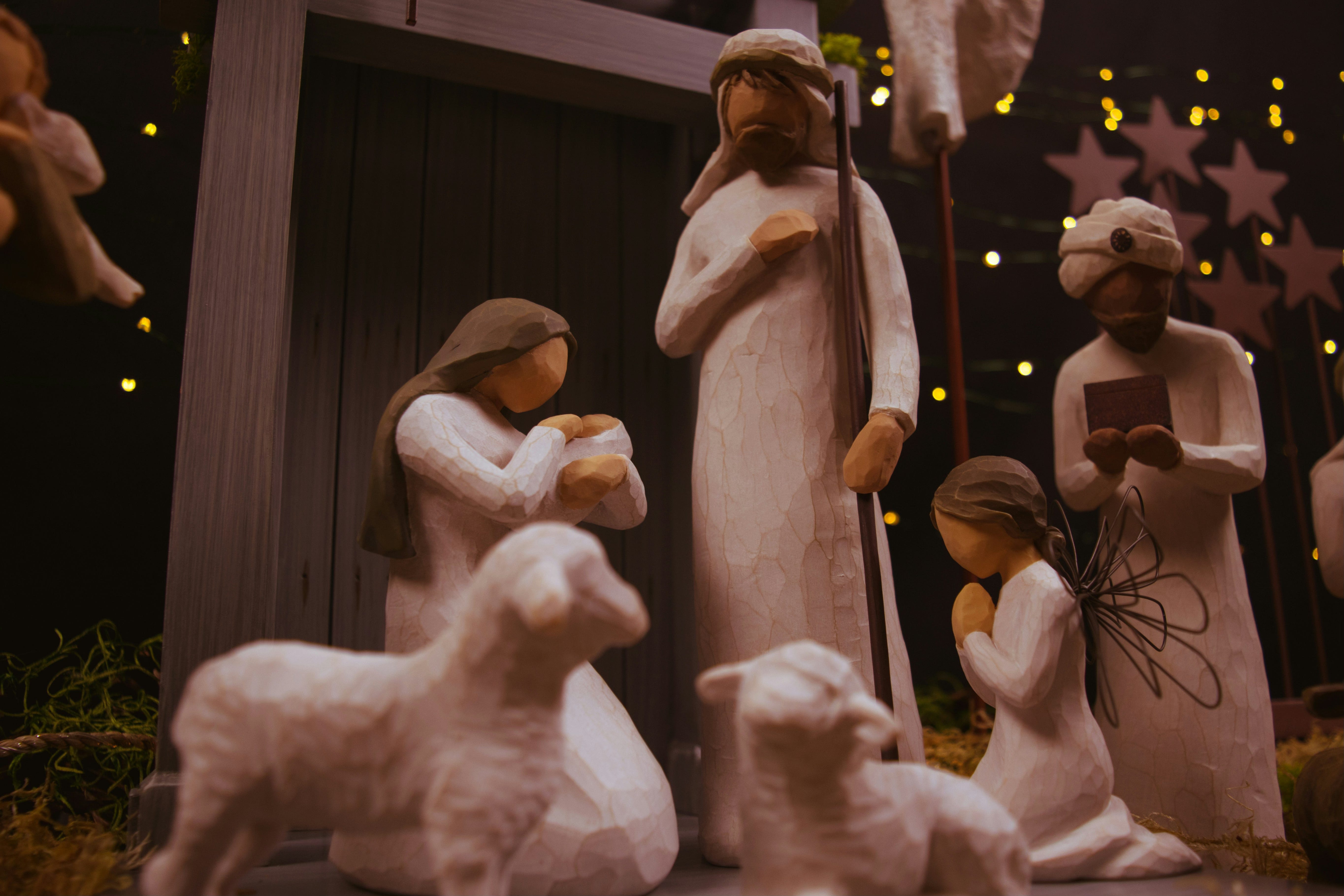
Photo by Dan Kiefer on Unsplash
In those days a decree went out from Emperor Augustus that all the world should be registered. This was the first registration and was taken while Quirinius was governor of Syria. All went to their own towns to be registered. Joseph also went from the town of Nazareth in Galilee to Judea, to the city of David called Bethlehem, because he was descended from the house and family of David. He went to be registered with Mary, to whom he was engaged and who was expecting a child. While they were there, the time came for her to deliver her child. And she gave birth to her firstborn son and wrapped him in bands of cloth, and laid him in a manger, because there was no place for them in the inn. In that region there were shepherds living in the fields, keeping watch over their flock by night. Then an angel of the Lord stood before them, and the glory of the Lord shone around them, and they were terrified. But the angel said to them, “Do not be afraid; for see-- I am bringing you good news of great joy for all the people: to you is born this day in the city of David a Savior, who is the Messiah, the Lord. This will be a sign for you: you will find a child wrapped in bands of cloth and lying in a manger.” And suddenly there was with the angel a multitude of the heavenly host, praising God and saying, “Glory to God in the highest heaven, and on earth peace among those whom he favors!” [When the angels had left them and gone into heaven, the shepherds said to one another, “Let us go now to Bethlehem and see this thing that has taken place, which the Lord has made known to us.” So they went with haste and found Mary and Joseph, and the child lying in the manger. When they saw this, they made known what had been told them about this child; and all who heard it were amazed at what the shepherds told them. But Mary treasured all these words and pondered them in her heart. The shepherds returned, glorifying and praising God for all they had heard and seen, as it had been told them.] - Luke 2:1-14(15-20)
It has always struck me as surprising that with all the buildup to the event, the birth of Jesus is stated so simply.
And she gave birth to her firstborn son and wrapped him in bands of cloth.
It sounds like there was no effort, no pain, just a simple act, the birth of a child.
We know that isn’t what happened. Mary had no midwife. She had Joseph and a place to lay the child when he was born.
Then the story shifts and goes to the shepherds in the fields.
According to Luke, Mary treasured all these words and pondered them in her heart, so Luke heard the story from Mary.
That could explain why there is no description of what she went through, this child in labor with her first child.
Mary was humble and filled with the Holy Spirit. She focused on the child and not on her. For all time, we will talk about this birth as a blessed, quiet event, a solemn experience culminating in a joyous celebration.
Either Mary, Luke, or both were aware of the symbolism of the shepherd. From one perspective, David had been a shepherd, and Jesus would be called the Son of David, the Messiah.
Also, Jesus will describe himself as the good shepherd. So, Mary, pondering all these things later in life, told the story of the birth in the simplest of forms.
A child was born.
We don’t hear her struggling in labor. We don’t hear the baby crying. We don’t see her taking him to her breast to feed him. We don’t see this the way we would see it in our lives. We see what she wanted us to see, the child.
Of course, we would say that it would have been wrong for her to make this about her, and yet we honor her for it.
We will say that Jesus made the ultimate sacrifice for all of us on the cross, but what about Mary and Joseph? This story reminds us that we all have a part to play in God’s plan. It may be huge, like Mary’s or less so, like Joseph’s, but there is something God has in mind for us to do.
This Christmas, let us ponder these things in our hearts and see if we can discover what it is God has called us to do.
We may be surprised.
More to come...