

Beginning With Love

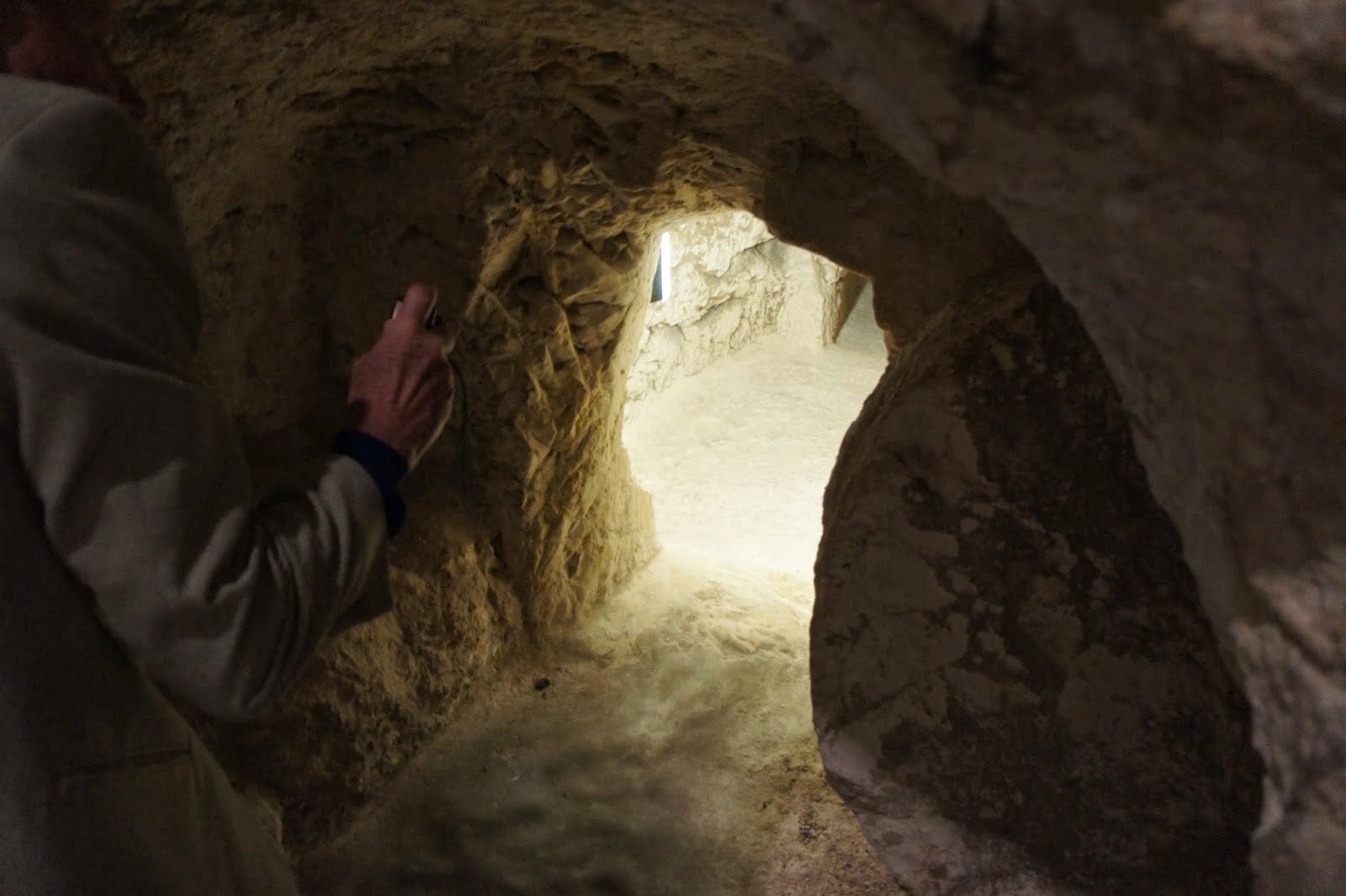
First Century Tomb
Sometimes amazing things happen and I am totally oblivious.
For the majority of the population of Ancient Israel, that was the case on this, the beginning of the third day after the last crucifixion before the Sabbath.
Punishment by death and the public display of that punishment was a way of life, as abhorrent as that sounds to us in our much more civilized time (so we like to believe).
And news travelled only as fast as one could walk, so, most of the residents of Jerusalem and probably all of the people in the surrounding region would have known or cared little of the events of the past few days, when another rebel, another trouble-maker was flogged and hung.
So, come the morning of the third day, after the rest, after the Sabbath, when the women came to finish the work of preparing the body, no one would have bothered to be present. The Gospel accounts of John, Matthew, Luke and Mark all support that. None of the men were there.
Early on the first day of the week, while it was still dark, Mary Magdalene came to the tomb and saw that the stone had been removed from the tomb. - John 20:1
After the sabbath, as the first day of the week was dawning, Mary Magdalene and the other Mary went to see the tomb. - Matthew 28:1
But on the first day of the week, at early dawn, they came to the tomb, taking the spices that they had prepared. They found the stone rolled away from the tomb, but when they went in, they did not find the body. - Luke 24:1-3
When the sabbath was over, Mary Magdalene, and Mary the mother of James, and Salome bought spices, so that they might go and anoint him. And very early on the first day of the week, when the sun had risen, they went to the tomb. - Mark 16:1-2
So, how were they going to do what they came to do?
Only Mark addresses this question:
They had been saying to one another, “Who will roll away the stone for us from the entrance to the tomb?”
The women had set out to fulfill their duty knowing they could not do it alone. They could not roll away the stone on their own, and they had no one to help them.
Could I have started a task like that without knowing how I could accomplish it?
The only way I would press forward against all odds is if I was so committed, so determined to do what had to be done, that I could think of nothing else, and could imagine nothing stopping me.
That is a sign of pure love.
In this one act, Mary Magdalene shows us the power of love, and in our awe and amazement at her discovery of the empty tomb, we may totally miss the significance of that act.
Nothing was going to stop her.
I believe that is an important message for us to remember on this glorious day. Through love, all things are possible. What we set out to do in love, we will find a way to accomplish.
It is only fitting, I think, that Jesus would reveal himself to the women first, since they were the ones doing exactly what he taught his disciples to do, to serve others with love and humility.
This was not a glorious or respected job, to prepare the dead. Just touching the dead was considered impure. This was dirty work, women's work.
So, while we raise our heads high in church today, patting ourselves on the back for believing in Jesus, we should remember that those closest to him fled, even though they knew what he told them about rising up again.
They wouldn't come to believe until he returned to them.
But Mary came to him, while he was still in the tomb, prepared for anything.
The lesson I take away from that act is this: Whatever impossible tasks lie before me, I will set out to do trusting in God, knowing He is with me, and with love and faith, He will show me the way.
More to come...