

Between the Lines

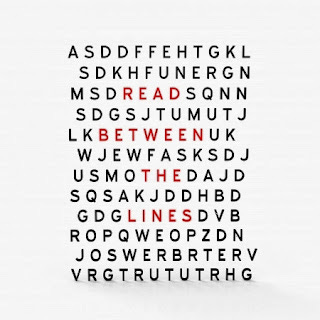
Have you ever been betrayed?
Trust is so important in everything we do, especially when we live and work in tight-knit groups. Betrayal of trust is is not just a slap in the face, it is akin to saying, "You matter so little to me, I will purposefully do this to hurt you!"
Very truly, I tell you, whoever receives one whom I send receives me; and whoever receives me receives him who sent me.' After saying this Jesus was troubled in spirit, and declared, 'Very truly, I tell you, one of you will betray me.' - John 13:20-21
In John's Gospel, Judas is painted as an instrument of the devil, but that isn't clear to the other eleven. What transpires next should be puzzling to anyone who was sitting at table with him that night.
So while reclining next to Jesus, he asked him, 'Lord, who is it?' Jesus answered, 'It is the one to whom I give this piece of bread when I have dipped it in the dish.' So when he had dipped the piece of bread, he gave it to Judas son of Simon Iscariot. - John 13: 25-26
Now, is this the image of Jesus you are comfortable with?
Where is Peter when this was said? He is the one who usually jumps up and springs into action without thinking, saying what he feels, confronting Jesus in one instance and then taking his side in another. He is outspoken and forthright, so why does he say nothing?
Maybe I expect too much from these accounts. After all, they aren't supposed to read like an historical novel. John's original audience in hearing or reading this would have had different expectations.
But how would they have understood Jesus' decision to let Judas go and "Do quickly what you are going to do?"
John has spent a lot of time in the first 12 chapters telling them that Jesus should be looked upon as one would look upon God. God, was not one to take betrayal lightly, at least not in the stories they knew. God was to be feared and respected, or else!
In that vein, they might have been stunned into silence. But what John tells us next makes me wonder if they were paying attention at all.
Now no one at the table knew why he said this to him. Some thought that, because Judas had the common purse, Jesus was telling him, 'Buy what we need for the festival'; or, that he should give something to the poor. So, after receiving the piece of bread, he immediately went out. And it was night. - John 13:28-30
Do you really think the apostles, after hearing Jesus tell them it was Judas who would betray him, that Judas was being told to go buy provisions for a festival?
Come on!
Jesus took a joyous occasion, Passover, and turned it into a farewell dinner riddled with impending doom, and they think Judas, who was just marked a traitor, was being sent shopping?
John didn't give us all the details of the conversation. He probably didn't know them. He wrote this down decades after the event took place. It was not an eyewitness account, so we don't get to experience the whole situation, unless we put ourselves into the story, partaking in the events with Jesus and the twelve, and anyone else who may have been there.
This is what we do each time we celebrate the Eucharist. We become part of the story, not just as witnesses, but participants.
We are not just performing some ritual without meaning. We are taking our place at the table. We know what comes next, after the meal and the walk to the garden, the arrest and the crucifixion, hung like a common criminal or insurrectionist.
Because we are part of the moment, we can read between the lines, feel for the frightened and confused apostles, and yes, even Judas.
The story plays out like one of the parables, with real people we can associate with and in whom we see ourselves.
And at the heart of it all is the way Jesus sums up the evening.
I give you a new commandment, that you love one another. Just as I have loved you, you also should love one another. - John 13:34
More to come...
Image credit: vencislav / 123RF Stock Photo