

Code of Honor

How do you know if you can trust someone?
“Whoever is faithful in a very little is faithful also in much; and whoever is dishonest in a very little is dishonest also in much. If then you have not been faithful with the dishonest wealth, who will entrust to you the true riches? And if you have not been faithful with what belongs to another, who will give you what is your own? No slave can serve two masters; for a slave will either hate the one and love the other, or be devoted to the one and despise the other. You cannot serve God and wealth.” The Pharisees, who were lovers of money, heard all this, and they ridiculed him. So he said to them, “You are those who justify yourselves in the sight of others; but God knows your hearts; for what is prized by human beings is an abomination in the sight of God. “The law and the prophets were in effect until John came; since then the good news of the kingdom of God is proclaimed, and everyone tries to enter it by force. But it is easier for heaven and earth to pass away, than for one stroke of a letter in the law to be dropped. - Luke 16:10-17
Would you not entrust that person with something small, a secret perhaps, and see if he or she can keep it?
We test our friendships, don't we?
If I cannot trust you to keep a tiny secret, there is no way I will entrust you with much more.
So, Jesus is telling us to look for the good in people and be wary of those who cannot be trusted, even with a little, for they will turn against you.
Now, if we flip that around, we begin to understand what Jesus was doing here on earth. Why would God come to us?
Even in those who are doing wrong, there can be good, especially if you focus on the faithfulness of individuals regardless of what they have done.
Is he trustworthy, we ask ourselves. We have heard the expression there is honor among thieves. Proverbs tells us there is no honor among thieves, but the expression talks to the fact that within each group, there is a code, and that code could be a sign of faithfulness.
So, Jesus comes to sit with those who have their own groups, their own codes, and he eats with them.
If he can show them that their honor has value to God, they may choose to follow.
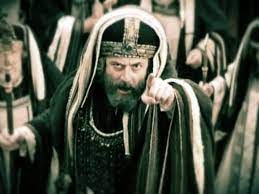
The Pharisees don't look at the population of sinners as potential converts. Instead, they shut them out, and for that reason, Jesus shuts them out.
More to come...