

False Fame

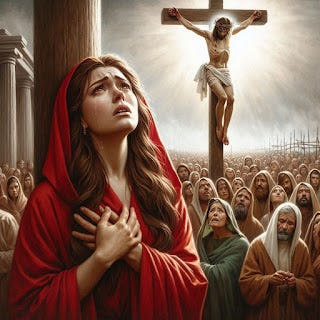
What would you like to become famous for?
Mary Magdalene and Mary the mother of Joses saw where the body was laid. When the sabbath was over, Mary Magdalene, and Mary the mother of James, and Salome bought spices, so that they might go and anoint him. And very early on the first day of the week, when the sun had risen, they went to the tomb. They had been saying to one another, "Who will roll away the stone for us from the entrance to the tomb?" When they looked up, they saw that the stone, which was very large, had already been rolled back. As they entered the tomb, they saw a young man, dressed in a white robe, sitting on the right side; and they were alarmed. But he said to them, "Do not be alarmed; you are looking for Jesus of Nazareth, who was crucified. He has been raised; he is not here. Look, there is the place they laid him. But go, tell his disciples and Peter that he is going ahead of you to Galilee; there you will see him, just as he told you." - Mark 15:47-16:7
Back in 591, Pope Gregory I decided that Mary Magdalene was a repentant sinner. He said this is a homily, “We believe that this woman is Luke’s female sinner, the woman John calls Mary, and that Mary from whom Mark says seven demons were cast out.”
He goes on to cement this idea in the minds of people with the following.
“And what did these seven devils signify, if not all the vices? . . . It is clear, brothers, that the woman previously used the unguent to perfume her flesh in forbidden acts . . .”
It is the work of Future Church, a Cincinnati-based church-reform organization that launched the nationwide adoption of today, July 22, as the feast day for this mislabeled and misunderstood saint.
So, who was Mary of Magdala?
This woman, who left her home to come and follow Jesus, was most likely a woman of wealth and station in her hometown, a commercial fishing site on the banks of the Sea of Galilee.
She is mentioned more times than any other woman in the New Testament, except Mary the mother of Jesus. And nowhere does the scripture conflate her with the woman who washed Jesus' feet with perfumed oil, a woman believed to have been a sinner.
Imagine being a devout follower and supporter of Christ and the world remembers you for something you never did.
What is so unique, though, is that the four Gospels relate the story of a woman, this woman, as being the first witness to the resurrection.
This was in a time when the testimony of a woman was considered invalid. They really didn't like women back then.
What we can learn from this is how hard it is to undo a false reputation. No matter what we do and say today, there will always be people who believe that this woman was a prostitute.
Not that there is anything wrong with that, as Jerry Seinfeld would say. But there is something seriously wrong with using one's position to make a false claim and have everyone believe it.
They call Gregory I, Gregory the Great. I think we should rethink that.
More to come...