

False Testimony

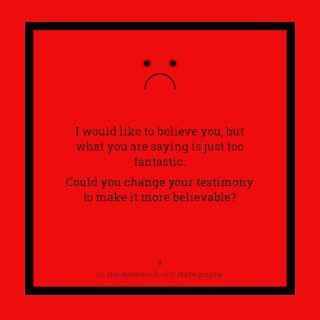
How much proof do we need before we believe?
He answered, ‘I do not know whether he is a sinner. One thing I do know, that though I was blind, now I see.’ - John 9:25
In today's Gospel reading, a blind man who has regained his sight is being questioned again and again because no one can believe what he has told them, that Jesus restored his sight.
When we read this story from the perspective of the blind man, we find it hard to understand how they could not believe him. But what if someone came before us and told us the same story?
It is one thing if God's grace is bestowed upon us. Then we are quick to share our story, but what if someone comes and tells us something miraculous happened to them? Would we buy it?
I believe John wants us to see ourselves in the unbelievers. He shows us the interrogation of this man so we can recognize our own skepticism and doubt.
Which is easier for us to believe, that someone who claims to have had a miraculous experience is telling the truth, or that someone accused of a crime is truly guilty?
Those hearing this man's story had a problem.
If they believed Jesus cured him, then Jesus was most likely from God. But if they refused to believe that, then they could not take action against him for curing the man on the Sabbath, which would be a crime.
While they want to believe he committed a crime, they have trouble accepting who he is.
So, they assume the man is giving false testimony and that makes the problem easier to solve, even though it resolves nothing about the incident.
So, what can we learn from this?
I guess the challenge is to listen and try to discern what is believable and what is not.
No one wants to appear gullible. No one wants to be conned. Yet, if we dismiss everything we hear as false testimony, what else are we missing?
More to come...