

It's What I Know

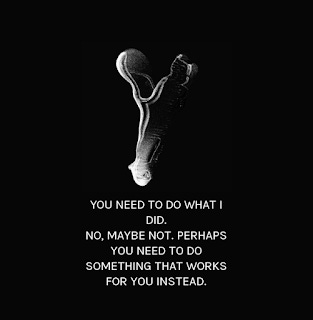
It makes sense, doesn't it, that I would do the things for others that I know have worked for me.
But Saul, also known as Paul, filled with the Holy Spirit, looked intently at him and said, "You son of the devil, you enemy of all righteousness, full of all deceit and villainy, will you not stop making crooked the straight paths of the Lord? And now listen-the hand of the Lord is against you, and you will be blind for a while, unable to see the sun." Immediately mist and darkness came over him, and he went about groping for someone to lead him by the hand. - Acts 13:9-11
In today's reading from the Acts of the Apostles, Paul encounters a man who has led people astray with his teaching.
Luke reminds us that this is Saul who had persecuted the followers of Jesus, Saul who had been struck blind by a vision of Jesus on the road to Damascus where he intended to do more of the same against them.
So, when Paul (Saul) encounters a man doing the same, he uses the same method to give the man reason to pause and rethink his ways. He makes him blind for a while.
So, here is the question. Is it right for us to impose on others the same method of restoration that worked on us?
It is one thing for Paul to judge this man and lead him to conversion, but is that what we should do when we encounter someone going down the wrong path, or, as in this case, leading others down it with them?
It is a difficult question to answer, since we like to believe that Christ didn't force people to change, but asked them what they sought instead.
So, what about Saul? What was his deal?
Jesus came to him in a vision and asked him why Saul was persecuting him. He let Saul discover his own transgressions, and he blinded him to give him time to think about it, before restoring him to sight.
It is that time to think that we can help people with, and I think that is our mission in life. We are here to love one another, and sometimes that means to listen, understand and offer a way for the individual needing to change to take the time to do just that.
Of course, we could always share what worked for us, and perhaps that will help the person see that there are many paths to the truth, but there is only one way to live in it.
The way I look at it is this. I can be concerned about you, without being judgmental, but I should not walk away without offering some opportunity for you to ask for help. If I can't give it, though, I should have some idea who can.
So, our challenge, then, is to be prepared to help others. A friend told me that may mean driving someone to an AA meeting or taking them to a hospital or rehab center.
Can I do that?
If I can't, then I should just walk away.
More to come...