

Last Embers

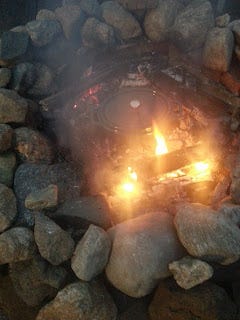
Today is an Ember Day. When I first heard the term, I immediately thought of glowing hot coals or pieces of burning wood left in the fireplace after the fire subsided. But in the Church Calendar, Ember Days mark the seasons, arriving in sets of three after St. Lucy's Day (Dec 13), Ash Wednesday, the Day of Pentecost, and Holy Cross Day (Sept 14).
The word ember comes from the Latin, Quattuor, meaning four or quarter. While the earliest records indicate there were three days, representing the sowing of seeds, the harvesting of the crop and the vintage, as time passed, the days coincided with the changing of the seasons, and in the Church, those times of the year were set aside for ordination.
The Book of Common Prayer contains special prayers and readings for individuals in support of their call to ministry. And for those of us in the process, these days have another special meaning. During the four Ember Weeks, candidates and postulants for holy orders are required by canon (church law) to report to the Bishop, either in person or in writing.
Wow. That sounds ominous, doesn't it?
Actually, it is not at all. The Ember Day Letter, as it is called, is not so much a formal report as a personal letter, bringing the Bishop up-to-date on our journey, our training, and most importantly, reflection on the experience of our spiritual and personal development. Over the three year period, these letters help to create a very personal relationship that is hard to define. You see, it isn't a one-way process. All the letters are read and answered by the Bishop, personally.
I have just sent off my last Ember Day Letter and I realize I am going to miss writing them. I will also miss receiving and reading the responses. We have had some interesting things happen during our discernment, training and preparation for ordination. The Bishop we began this process with retired, so my letters have come from two Bishops. That doesn't happen often. It is rare to have two mentors in a process, and in a way, that is a lesson in itself. Things change. People and roles change. Relationships change, but the call to serve is constant.
This process is unlike any other preparation or training I have ever experienced. It is both humbling and uplifting. Where else would so many work so faithfully and for so long to prepare a recruit for work? I can understand why the EfM (education for Ministry) course is so popular for those who are not planning on being ordained, but have a yearning for that mentorship in their Study, Reflection and Worship, the three foundational elements of the program. I don't believe God intends us to do anything in this life alone. He is with us. He is always with us, but not just in a spiritual sense. We are all called to be as much as to do.
Maybe that's another way of looking at these days that come with the seasons. These are the reminders of the burning faith within us, those embers that continue to glow and warm those around us, even when the fire is out. Especially when the fire is out.