

Lesson Learned?

Sometimes God uses us not to teach others, but for us to learn ourselves.
The word of the Lord came to Jonah a second time, saying, ‘Get up, go to Nineveh, that great city, and proclaim to it the message that I tell you.’ So Jonah set out and went to Nineveh, according to the word of the Lord. Now Nineveh was an exceedingly large city, a three days’ walk across. Jonah began to go into the city, going a day’s walk. And he cried out, ‘Forty days more, and Nineveh shall be overthrown!’ And the people of Nineveh believed God; they proclaimed a fast, and everyone, great and small, put on sackcloth. When the news reached the king of Nineveh, he rose from his throne, removed his robe, covered himself with sackcloth, and sat in ashes. Then he had a proclamation made in Nineveh: ‘By the decree of the king and his nobles: No human being or animal, no herd or flock, shall taste anything. They shall not feed, nor shall they drink water. Human beings and animals shall be covered with sackcloth, and they shall cry mightily to God. All shall turn from their evil ways and from the violence that is in their hands. Who knows? God may relent and change his mind; he may turn from his fierce anger, so that we do not perish.’ When God saw what they did, how they turned from their evil ways, God changed his mind about the calamity that he had said he would bring upon them; and he did not do it. But this was very displeasing to Jonah, and he became angry. He prayed to the Lord and said, ‘O Lord! Is not this what I said while I was still in my own country? That is why I fled to Tarshish at the beginning; for I knew that you are a gracious God and merciful, slow to anger, and abounding in steadfast love, and ready to relent from punishing. And now, O Lord, please take my life from me, for it is better for me to die than to live.’ And the Lord said, ‘Is it right for you to be angry?’ Then Jonah went out of the city and sat down east of the city, and made a booth for himself there. He sat under it in the shade, waiting to see what would become of the city. The Lord God appointed a bush, and made it come up over Jonah, to give shade over his head, to save him from his discomfort; so Jonah was very happy about the bush. But when dawn came up the next day, God appointed a worm that attacked the bush, so that it withered. When the sun rose, God prepared a sultry east wind, and the sun beat down on the head of Jonah so that he was faint and asked that he might die. He said, ‘It is better for me to die than to live.’ But God said to Jonah, ‘Is it right for you to be angry about the bush?’ And he said, ‘Yes, angry enough to die.’ Then the Lord said, ‘You are concerned about the bush, for which you did not labour and which you did not grow; it came into being in a night and perished in a night. And should I not be concerned about Nineveh, that great city, in which there are more than a hundred and twenty thousand people who do not know their right hand from their left, and also many animals?’ - Jonah 3:1-4:11
Does Jonah have a right to be angry with God?
God used Jonah, against his will, to warn the people of Nineveh, and when the people listened and changed their ways, God relented.
Jonah should have been happy. He accomplished his mission and was successful!
What did Jonah want? Had he convinced himself the evil must die and when God changed his mind it messed everything up for him?
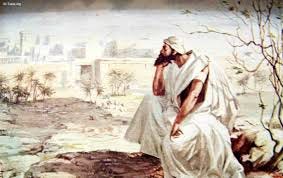
Whatever was going on in Jonah's head, God was determined to reach him and teach him a lesson. So, He raised up a tree to shade Jonah when he was in the sun.
Even though Jonah was angry with God, God was determined to reach out to him and comfort him. So, when God killed the tree, Jonah became angry with God again, and he wanted to die.
God then drew a parallel between the tree that Jonah mourned and the people God saved.
It reminds me of the reaction we have to seeing someone abuse or neglect a pet, yet we walk right past a homeless person sitting in the cold.
Compassion and empathy are the most valuable human traits, for without them, we are alone and miserable. God has compassion for us, even when we have no compassion for anyone else.
It is drawn from love which allows us to care and to forgive.
It is not our job to judge. It is our calling to love.
More to come...