

Prune and Be Pruned

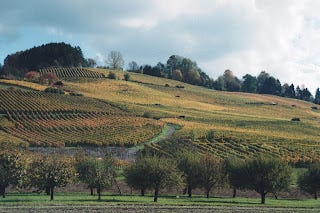
Vineyards in Switzerland
One of the hardest things I have ever had to do in my career was to fire someone who was not producing at the level needed.
Perhaps if I had been a better gardener, I would have understood the need to prune and cut back, even when the yield is good, when the flowers are full on the branches and the colors are bright.
My father was better at that than I. He knew that if you left the garden or the yard to its own devices, it would become a tangled mess, with smaller shoots and buds being shut out by their parents and older siblings, as they competed for sun, water and nutrients from the soil.
I was a quick study when it came to some things, like splitting irises, so they wouldn't clump together and rot the roots. And rose bushes were clipped, mostly because we brought the flowers in to decorate our table.
But Dad also gave away a lot of plants to neighbors, and he cut back trees and bushes so they would come in fuller.
While these things are necessary for a beautiful flower garden, the idea of cutting branches or stalks that will bear fruit of vegetables seemed counterproductive to me. Why limit the production of tomatoes from each plant, or peppers, or peaches or grapes?
He removes every branch in me that bears no fruit. Every branch that bears fruit he prunes to make it bear more fruit. - John 15:2
I really didn't understand the way things grow strong and rich with color, fragrance and flavor, until I visited a vineyard and saw the stubby little sticks that would become the vines.
Unless the new shoots form on the old trunk, there will be no fruit. It is pretty basic a concept, really, and one I found difficult to apply to the business world.
People aren't branches. Cutting back affects the lives of people.
I guess that could be a show-stopper for many of us who don't want to hurt anyone, but is it really helping them if we fail to be good gardeners?
The military seems to do a good job of cutting away all the stuff that does not grow into a good soldier, and then working with what's left to produce a strong producer within an even stronger team. Perhaps it does too good a job at molding and shaping to become a soldier, and too little pruning back and reshaping to help turn the good soldier back into a different kind of producer, one that can live with itself and others in a non-combat situation.
I wonder how many of us can trace back our troubles and anxieties to poor pruning and shaping.
If I spend most of my life or career able to grow freely, I may feel trapped and confined in a retirement community.
If I was groomed and molded into one specialized field, it can be a struggle to find a way to learn new things and develop new skills.
In order to be good at gardening, we need to know what amount of pruning and shaping works for each type of plant. We are not all roses or lilacs or grapevines.
So, how do we know what types of fruit we will bear, and how we need to be shaped?
That is why I do these daily reflections.
I find the questions I raise from reading and meditating on Scripture help me to deal with the changes I encounter, and to discover hidden fruits that are waiting to bud and grow within me.
In the process of reading and reflecting, I have started to strip away layers of less productive activity. I have even developed a routine giving this priority over other things. Maybe I am learning how to be a self-pruner, and that could be a good thing, especially if I wish to invite others to come sit with me in my garden.