

Putting Your Skills to Work

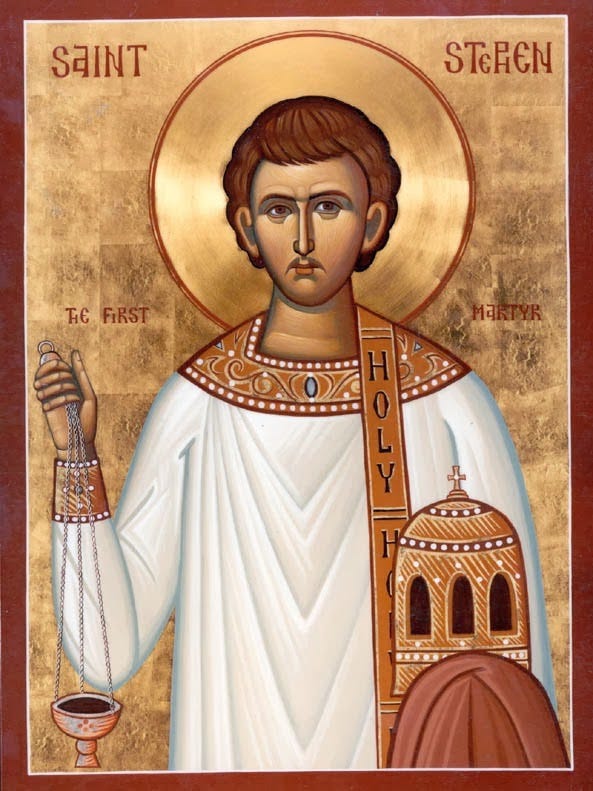
It's that time of year again, when we are reminded of the role of deacons, in the story of Stephen and six others to be the first among many to have that calling.
What they said pleased the whole community, and they chose Stephen, a man full of faith and the Holy Spirit, together with Philip, Prochorus, Nicanor, Timon, Parmenas, and Nicolaus, a proselyte of Antioch. They had these men stand before the apostles, who prayed and laid their hands on them. The word of God continued to spread; the number of the disciples increased greatly in Jerusalem, and a great many of the priests became obedient to the faith. - Acts 6:5-7
It is clear that by adding these men and giving them work to do, the Word of God spread, but what isn't clear is who did the job of spreading the Word.
It was not the job of the deacons, but of the Apostles.
The deacons took over the tasks of caring for the poor, feeding the hungry, clothing the naked, attending to the sick, visiting the imprisoned.
I imagine it was a full-time job for them, and the primary job was caring for the ones others neglected, the widows and orphans who had no one to support them.
Today, we envision soup kitchens and food pantries, but back then, there could have been much more involved, from organizing the meals to negotiating food purchases or even arranging to have plots of land devoted to the cause.
To wait on the tables of the hungry and leave the job of spreading the word to the elders, one had to be resourceful. One had to have business sense and the ability to motivate people to help, to get on board.
Deacons today have the same challenges. We need to share our vision of a world without hunger, a world where where all come together to help each other survive and thrive.
That requires enlisting the support of others, something we are not trained to do in the Church. It is learned in the business world, and brought to the Church.
This is what we need in the Church. We need the skills that focus on recruiting, training, empowering, supporting, planning, organizing and running things.
That is why it is a part-time job in our diocese, something that can be done while we are still working in the world.
So, what do you say? Are you game?
Even if you don't choose to become a deacon, you are sorely needed to join the team. Because we do not work alone.
Think about it.
More to come...