

Risking It All

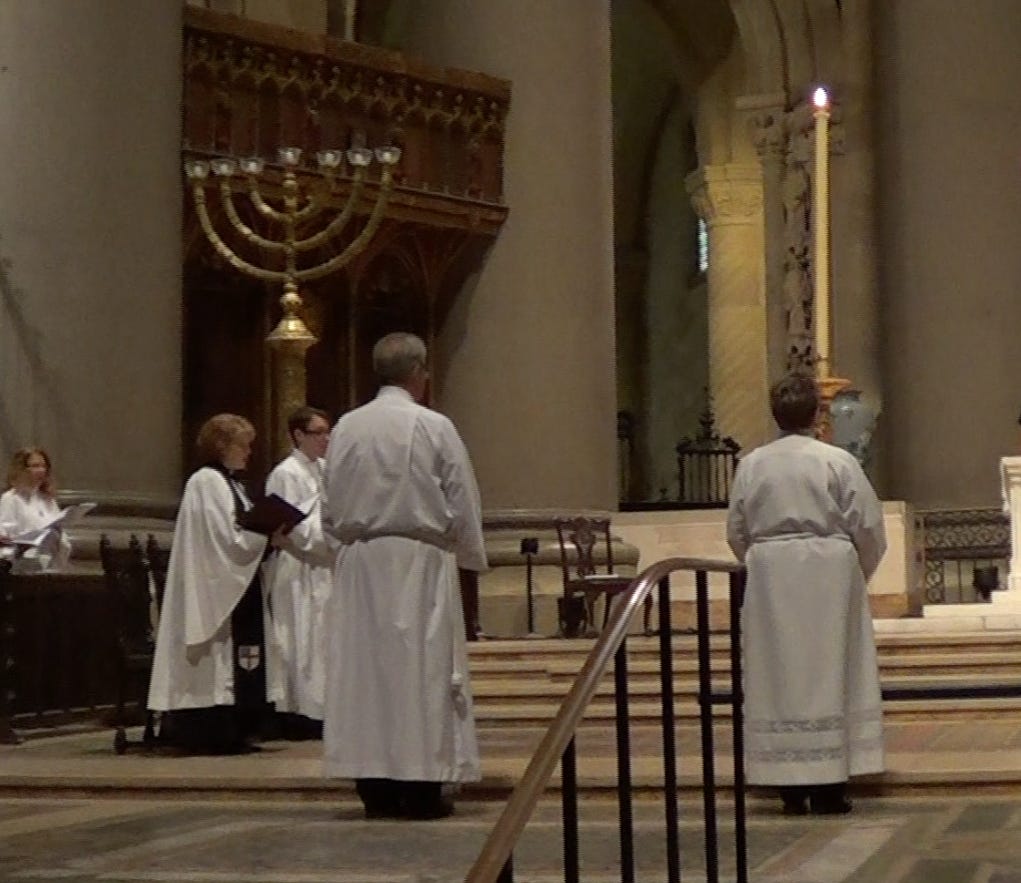
Ordination
What would you risk to save a loved one who is in trouble?
So the enemy took all the goods of Sodom and Gomorrah, and all their provisions, and went their way; they also took Lot, the son of Abram's brother, who lived in Sodom, and his goods, and departed. Then one who had escaped came and told Abram the Hebrew, who was living by the oaks of Mamre the Amorite, brother of Eshcol and of Aner; these were allies of Abram. When Abram heard that his nephew had been taken captive, he led forth his trained men, born in his house, three hundred eighteen of them, and went in pursuit as far as Dan. He divided his forces against them by night, he and his servants, and routed them and pursued them to Hobah, north of Damascus. Then he brought back all the goods, and also brought back his nephew Lot with his goods, and the women and the people. - Genesis 14:11-16
Today's reading from Genesis caught my eye. What got me thinking was Abram's reaction to the news of his nephew's capture.
It isn't the fact that he went to save Lot that interested me; I focused on those he took with him.
Three hundred eighteen men who were kinsmen, brethren, born in his house, trained by him. Yes, they were servants, but servants who were totally loyal to him, ready to sacrifice their own lives at his command.
Now we could argue that these men had no choice but to do as they were told, and when we say that, it sounds like a bad thing, doesn't it? It sounds like they had no personal freedom, and in today's world, that is not only criminal, but the very suggestion that living in such conditions of servanthood can be beneficial is considered cruel and heartless speech.
Submitting to the power of another is considered a weakness, yet I would not want to come upon these men without significant protection. They were anything but weak.
I am also sure that Abram was as committed to them as they were to him.
He trusted them. If he didn't, would he have subjected himself to being alone with them? They were armed and under his command, and yet not one of them turned against him in an effort to free himself from his control, his stewardship.
Abram had the resources to care for his servants, to provide for them, to feed them and provide security for them. They may not have had a choice in giving up their freedom in exchange for such protection and care, but I am not sure the arrangement was as bad as we, in our current mindset, might think.
It is clear we can not appreciate the situation, for the very thought that the relationship could have been symbiotic and loving is anathema to us. It is slavery!
Would Abram have gone out if one of his servants had been taken?
Interesting question, isn't it? It is a judgmental question as well. It assumes something about Abram's character that we have no way of knowing from the story.
But wait. Read that last line.
Then he brought back all the goods, and also brought back his nephew Lot with his goods, and the women and the people.
Along with Lot, the servants who were taken were also brought back.
As a servant of Christ, as one who seeks to dedicate his life to the service of others, I am just like the three hundred eighteen, am I not?
Perhaps some would see me as weak, dependent, a slave to my faith, and that is their prerogative.
They have no way of knowing how I feel about this relationship I have with God, just as we have no way of knowing how the men in Abram's service felt.
In his sermon yesterday, Fr. Tobias (St. James Fordham) mentioned that even among slaves there was a a hierarchy, a class structure, with those who worked in the house feeling superior to those who worked in the field.
I guess we can't resist the temptation to judge others, to see ourselves as better than another.
It all boils down to trust and love, doesn't it? God trusted us enough to be born a babe in our arms and to die in our hands. And he loves us enough to forgive us from failing to do the same for each other.
More to come...