

Seeking Answers

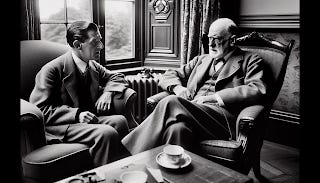
There are times when we just want answers.
Then Job answered: "Today also my complaint is bitter; his hand is heavy despite my groaning. Oh, that I knew where I might find him, that I might come even to his dwelling! I would lay my case before him, and fill my mouth with arguments. I would learn what he would answer me, and understand what he would say to me. Would he contend with me in the greatness of his power? No; but he would give heed to me. There an upright person could reason with him, and I should be acquitted forever by my judge. "If I go forward, he is not there; or backward, I cannot perceive him; on the left he hides, and I cannot behold him; I turn to the right, but I cannot see him. But he knows the way that I take; when he has tested me, I shall come out like gold. My foot has held fast to his steps; I have kept his way and have not turned aside. I have not departed from the commandment of his lips; I have treasured in my bosom the words of his mouth. - Job 23:1-12
The story of Job is probably the only story we have in The Bible that most represents humanity's view of God.
Job is a true believer and tries to be faithful in his belief, but life gets in the way.
He is us when we rail against God for the unfairness we experience in this life. Why me?
We want answers. What have I done to deserve this? And we get angry that God seems to want to remain silent.
I just watched "Freud's Last Session" on Netflix. It stars Anthony Hopkins as Sigmund Freud and Matthew Goode as C.S. Lewis. It is fiction based on the fact that Freud had a meeting with an Oxford don before he committed suicide, and it supposes that the professor he met with was Lewis.
At one point, Freud who is dying from cancer, says, “I wish cancer had eaten into my brain instead of my cheek and my jaw, so that I could hallucinate God and seek my bloody vengeance on him.”
It is Job's complaint coming from an atheist position and it points out our need for God, or at least our need for answers that are beyond our understanding.
That is to say that what Voltaire said, "If God didn't exist, we would need to invent him" is true in a sense.
We need God's answers because we cannot come up with them ourselves.
The interesting thing about the exchange between Freud and Lewis in the story is that Freud, who doesn't believe in God, wants to blame him, while Lewis fumbles with his own answers.
I don't believe the story does Lewis justice. He could have at least said that wars and killing are human inventions, not God's, but it still leaves us with unknown sources of pain, like disease.
Each of us has our own questions for God, and I guess that is a good thing. It invites us to prayer, which is our attempt, like Job, to have a conversation with God.
We may not think God is paying attention, but that could be because we don't know how God answers our questions.
Sometimes, it is not with words at all.
More to come...