

Skirting the Law

Whenever something terrible happens, when someone commits a heinous crime against another, for example, our politicians are quick to respond, proposing a law to solve the problem.
I remember boarding the 5:33 train to Garden City on the night of December 7, 1993, the night Colin Ferguson unloaded his automatic handgun on innocent commuters, killing five and wounding nineteen others. I should have stayed on that train because I had class at Adelphi, but for some reason, I thought class was canceled that night. So, I got off the train at Jamaica and waited to board the train home.
Carolyn McCarthy, whose husband was killed that night, took up the cause to limit the sale of hand guns. She went on to become a congresswoman and has been very successful at championing the cause, working hard to pass legislation to ban the sale to tourists, require locks on guns, and gain support for the Federal Assault Weapons Ban.
Despite all these laws, it is estimated that more people own handguns today than in 1997.
Do laws really change behavior?
It is human nature to find a way to skirt the law. We all do it from time to time, and we rationalize in a variety of ways, to the point where we become so accustomed to doing it, we don't even see it as breaking the law.
For whoever keeps the whole law but fails in one point has become accountable for all of it. - James 2:10
In today's reading, James tells us to pay attention to the entire law and follow all of it, not just the parts that are convenient or that fit our lifestyle.
Some laws, like the ones aimed at controlling or banning the sale and ownership of weapons, are so embroiled in controversy over our rights as citizens, that no effective law can really be passed.
By effective, I mean no law gets to the intended goal, so we wind up with laws that limit and restrict, rather than ban.
Whether you believe they should be banned or not, how can and should we assess the effectiveness of these laws?
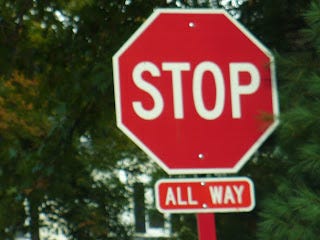
If we are skeptics or realists, depending upon our point of view, we might look at human behavior regarding what I would call small laws, like stopping at stop signs and keeping the speed limit, as an indicator of the degree to which the big laws, like gun control, will be effective.
It is not very reassuring, is it?
If we, by nature, choose to skirt the law whenever possible, we are missing the whole point of the law.
This is what James is pointing out. To be true to the law, he says we must be accountable to all of it, not just the parts we agree with.
Love your neighbor as yourself.
That sounds like a simple law, but it is anything but. If everyone did that, no one would think of taking up a weapon against another.
I know. It is a dream world, but it is the one Jesus wanted us to dream about. So, what do we do?
Do we work harder at living up to the dream, or do we pass another bill and pat ourselves on the back, thinking we did something real?