

Someone Pays

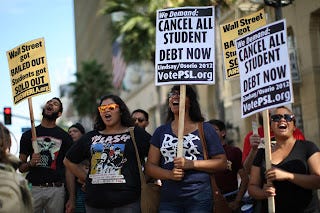
If you enter into an agreement to pay for something, shouldn't you honor that agreement when the time comes?
Then he began to speak to them in parables. "A man planted a vineyard, put a fence around it, dug a pit for the wine press, and built a watchtower; then he leased it to tenants and went to another country. When the season came, he sent a slave to the tenants to collect from them his share of the produce of the vineyard. But they seized him, and beat him, and sent him away empty-handed. And again he sent another slave to them; this one they beat over the head and insulted. Then he sent another, and that one they killed. And so it was with many others; some they beat, and others they killed. He had still one other, a beloved son. Finally he sent him to them, saying, 'They will respect my son.' But those tenants said to one another, 'This is the heir; come, let us kill him, and the inheritance will be ours.' So they seized him, killed him, and threw him out of the vineyard. What then will the owner of the vineyard do? He will come and destroy the tenants and give the vineyard to others. Have you not read this scripture: 'The stone that the builders rejected has become the cornerstone; this was the Lord's doing, and it is amazing in our eyes'?" - Mark 12:1-11
Jesus picked a great story to illustrate the temptation of ignoring our responsibility to pay for what we purchase.
In this case, the tenants made an agreement to pay for the use of the land. They started in a position of debt, but knew that once the harvest came in, they would be able to pay.
When the harvest came, they got greedy and chose to keep everything for themselves.
I think the problem here is timing.
When I was young, ages ago, ownership was the reward of hard work. You would enter into an agreement to buy something, even something inexpensive, like a pair of pants, and you would pay a little each week or month until you had paid the total amount, and then you got to take home the pants.
The reward came after you paid, not before, or even during the payment process.
The exceptions were big things like homes and cars which could be purchased with loans, requiring interest and premium payments each month.
When the money doesn't come right away, like in the case of the tenants, the sacrifice of paying back the loan is delayed. By the time the day comes when payment is due, we may no longer feel as committed to giving up what we worked so hard to make.
We made the commitment, though, and we did benefit, so shouldn't we honor it?
Now, we could argue that the price one has to pay is too high, but the time to make that argument was when the loan was negotiated, not when it comes due.
We will hear arguments that the owner of the land is rich and can afford to cancel the debt.
If he wanted to give the land to the tenants to farm without payment, he would have done that beforehand. He may owe others for services he sought and for which he promised to pay, so should they be forgiven also?
Nothing is truly free, is it?
Someone has to pay.
If we want to cancel all debt, maybe we should go back to paying cash for everything at the time of purchase. Then only those who work and save will be able to enjoy the benefits of their labors.
More to come...