

The Gift of Fallibility

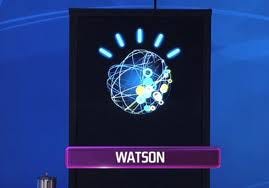
IBM's Watson on Jeopardy!
I like to think I don't make mistakes, but that would be wrong. We humans have been given a great gift - fallibility.
We can be wrong! Isn't that wonderful?
I agree that it may sound crazy to praise our human nature, complete with all its imperfections, but there is a method to my madness, an appreciation for the creative spirit that can only be set free when failure is an option.
Let's look at IBM's Watson, for example. Researchers spent a great deal of time and money trying to reproduce how the human mind solves complex and yet subtle problems, not just to be able to compete on the game show Jeopardy!, but to assist us in many practical applications where the analysis of many permutations is required in real time.
What sets Watson apart from our desktops is its ability to learn from its mistakes.
Did I say mistakes? What I mean is Watson interprets what it hears, comes up with options and weighs their value, and then, in order to learn, it needs to know if the result it weighed highly was correct or not. It learns.
What it isn't designed to do is pick a low probability result and decide to go with that, even though it is not the best answer.
Guess what? We can do that!
We can make decisions based on something other than reason and probability. And, if we fail to accomplish our goal, we can refuse to learn from that experience.
How cool is that?
In addition, we can make connections that make no logical sense. Hearing about a horrible experience can trigger an emotional response and a reaction that may not make sense to the logical mind. The recent fire and crash of a hot air balloon in India is a perfect example. Seeing what happened to others might impact my desire to take a hot air balloon trip anywhere, even though I have been in one and loved it.
This gift of judgment, good and poor, is ours and ours alone as humans. So, here's a question that rattles around in my mind. If Jesus was both fully divine and fully human, was he fallible like us?
I can do nothing on my own. As I hear, I judge; and my judgment is just, because I seek to do not my own will but the will of him who sent me. - John 5:30
In John's Gospel, Jesus tells us that it is through his will that he suspends his judgment, deferring to the Father. This may be troubling, but he goes on to make an even more troubling statement.
If I testify about myself, my testimony is not true. There is another who testifies on my behalf, and I know that his testimony to me is true. - John 5:31-32
I thought Jesus could do no wrong and say nothing that wasn't true.
I don't profess to know anything of any certainty when it comes to the nature of Jesus, but I know I will continue to try to understand.
Why?
I look at it this way. God chose to come among us as one of us for a reason. Maybe, like us, since we are made in His image, that reason is not the logical choice, but the emotional, personal, loving choice. By showing me that it is possible in human form to set aside one's will in order to avoid judging another, I may be able to climb out of the pit I find myself in at times, and let His will be done, whether I believe it is the right thing or not.
I'm fallible. Help my fallibility.