

The Sixth Day

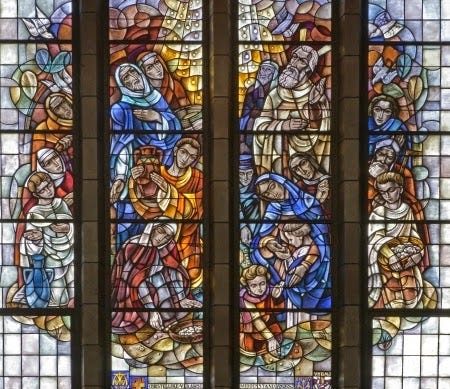
Gathering of the Manna.
Detail from windowpane of National Basilica of the Sacred Heart
built between years 1919 - 1969 on June 22, 2012 in Brussels.
We all know that the seventh day is for resting. It is the day the Lord rested after creation and it is the day Moses commanded the people to observe the Holy Rest of the Lord.
Moses said, "Eat it today, for today is a sabbath to the LORD; today you will not find it in the field. Six days you shall gather it; but on the seventh day, which is a sabbath, there will be none." On the seventh day some of the people went out to gather, and they found none. The LORD said to Moses, "How long will you refuse to keep my commandments and instructions? See! The LORD has given you the sabbath, therefore on the sixth day he gives you food for two days; each of you stay where you are; do not leave your place on the seventh day." So the people rested on the seventh day. - Exodus 16:25-30
Why a sabbath?
These days it seems impossible to find a day of rest. Even on those days when we are not in our normal "work" mode, we find ourselves rushing to do one thing or another, and most of those things are not at all restful.
But what if we shift our focus a bit from the seventh day to the sixth and take a look at what Moses said about that day?
He tells the people that they receive twice as much on the sixth day so that they can set some aside for the seventh.
Do you think God may be telling them to plan for the day of rest, to invest in it?
It is an interesting lesson if you think about it. God is taking care of their needs, providing them daily bread, manna. All they have to do is go into the field to get it. But there is something God expects from them as well. Responsibility.
In order to have food on the seventh day, they need to store up half of what they find on the sixth. In other words, they have to work for that day's food.
If they only harvest what they need for one day, they will go hungry the next. If they squander the surplus, the same will happen. The sabbath is the day they need to provide for, because it is the day their benefactor, God, will rest from supporting them.
What does that tell us about how we should help those in need?
In a way, it may be an answer to the question of when to offer help and what help to offer to someone in need.
There is a young man who comes to our church regularly looking for a hand out. Each time I give him something to help him get food for his child or pay the rent, I offer to sit with him and his family to help them come up with a plan, a set of goals to work toward to get out of the situation. Each time he says he will come, but he doesn't.
Last week, I had nothing to offer him other than my time and he went away disappointed, perhaps even a bit angry. He had approached several other people that day and even interrupted the service during the Passing of the Peace.
Am I wrong to say "No" to his request and place some of the responsibility on him to do something for himself?
I was feeling a bit guilty for feeling frustrated with him, but in today's reading, I find something that can help me know what to say next time.
If God can expect a wandering tribe in a dessert with no food, no jobs, no shelter to take some responsibility for themselves, shouldn't we, even when we are in a similar state?
I never looked at the sabbath that way before. I never saw it as a test of our willingness to fend for ourselves, to take ownership of our lives, to take care of our families and friends, to find dignity in a time of poverty and destitution.
God does provide, not just manna, but a sense of self-worth and value, something far more important than food.
I will never look at the sabbath the same way again.
More to come...
Image credit: sedmak / 123RF Stock Photo