

The Encounter
John 4:1-26

Why did Jesus need the woman to draw water from the well for him?
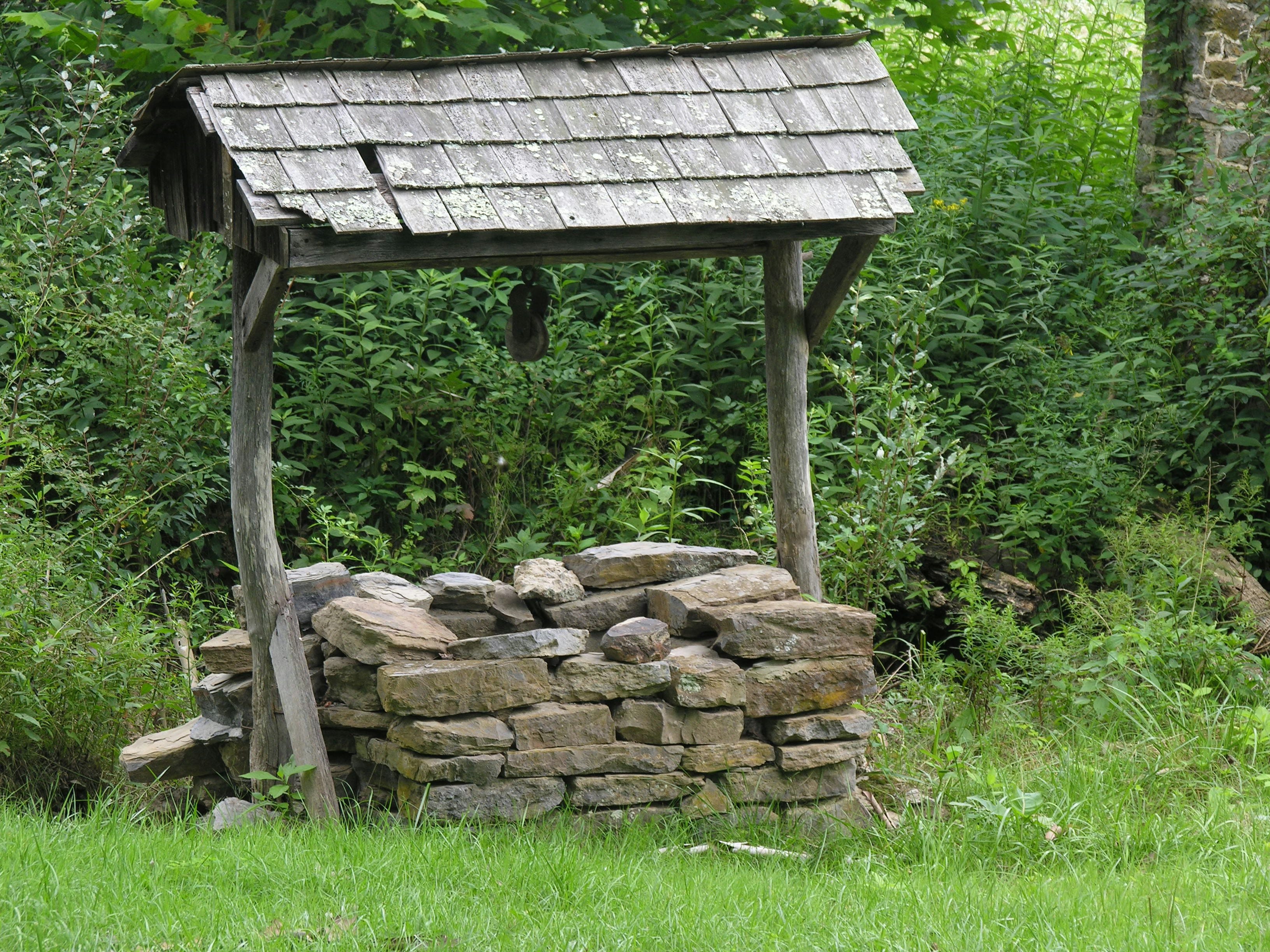
Photo by Michael Barrick on Unsplash
Now when Jesus learned that the Pharisees had heard, “Jesus is making and baptizing more disciples than John” -- although it was not Jesus himself but his disciples who baptized-- he left Judea and started back to Galilee. But he had to go through Samaria. So he came to a Samaritan city called Sychar, near the plot of ground that Jacob had given to his son Joseph. Jacob’s well was there, and Jesus, tired out by his journey, was sitting by the well. It was about noon. A Samaritan woman came to draw water, and Jesus said to her, “Give me a drink.” (His disciples had gone to the city to buy food.) The Samaritan woman said to him, “How is it that you, a Jew, ask a drink of me, a woman of Samaria?” (Jews do not share things in common with Samaritans.) Jesus answered her, “If you knew the gift of God, and who it is that is saying to you, ‘Give me a drink,’ you would have asked him, and he would have given you living water.” The woman said to him, “Sir, you have no bucket, and the well is deep. Where do you get that living water? Are you greater than our ancestor Jacob, who gave us the well, and with his sons and his flocks drank from it?” Jesus said to her, “Everyone who drinks of this water will be thirsty again, but those who drink of the water that I will give them will never be thirsty. The water that I will give will become in them a spring of water gushing up to eternal life.” The woman said to him, “Sir, give me this water, so that I may never be thirsty or have to keep coming here to draw water.” Jesus said to her, “Go, call your husband, and come back.” The woman answered him, “I have no husband.” Jesus said to her, “You are right in saying, ‘I have no husband’ for you have had five husbands, and the one you have now is not your husband. What you have said is true!” The woman said to him, “Sir, I see that you are a prophet. Our ancestors worshiped on this mountain, but you say that the place where people must worship is in Jerusalem.” Jesus said to her, “Woman, believe me, the hour is coming when you will worship the Father neither on this mountain nor in Jerusalem. You worship what you do not know; we worship what we know, for salvation is from the Jews. But the hour is coming, and is now here, when the true worshipers will worship the Father in spirit and truth, for the Father seeks such as these to worship him. God is spirit, and those who worship him must worship in spirit and truth.” The woman said to him, “I know that Messiah is coming” (who is called Christ). “When he comes, he will proclaim all things to us.” Jesus said to her, “I am he, the one who is speaking to you.” - John 4:1-26
Sometimes the answer to our questions is obvious, but only if we understand something about the culture, time, or place.
Jesus needed the woman to draw water from the well because the well had no rope or bucket. One needed to bring one’s own with them to get water.
Commentaries point out that the disciples had gone into town with all their supplies, including the rope and bucket that they would have used to draw water.
Now, John is using this circumstance to point out that Jesus initiates the conversation with the woman, which may seem normal to us, but was unusual at the time and in this place.
First, this is a woman alone, and Jesus is a man alone. That encounter is awkward enough.
But the woman is a Samaritan. Jesus is a Jew. They would normally not have anything to do with each other. The norm would be to avoid using the same vessels as a Samaritan, so having the woman share hers with Jesus was also against the norm.
When we were in Israel in 2012 on a pilgrimage with our church, we went to Jacob’s well, and it had a crank, with a rope and a bucket. The bucket took a long time to reach the water. So, when the woman remarks that Jesus has no bucket and that the well is deep, she is being practical.
Jesus uses this opportunity to teach the woman about himself, and that, too, is unusual. He is breaking all the taboos here, and we, with our modern views, may easily miss how striking this encounter is.
I believe the lesson here is not for the woman, but for us.
We get to see Jesus extend himself across several social barriers to make a connection. He will revisit this encounter in the parable about the Good Samaritan, as a teaching moment for his disciples.
The one standing before us is worthy of our attention, regardless of the circumstances of his or her birth, beliefs, and culture.
The conflict here is both external, based on traditions, laws, and customs, and internal, based on personal prejudices and fears.
We encounter all sorts of obstacles to connection in our day, and it is up to us to break down those barriers to take the first step closer.
Jesus sets the example for us, but we have to find a way to follow it.
Regardless of one’s personal beliefs or views about others, there is a way to look into the heart, mind, and soul of another human being and see God.
That is the encounter we should strive for. In everyone we meet, through every chance encounter, we can be one with God, if we choose to reach out.
More to come...
I love todays message!!!
It is another example where Jesus demonstrates His ministry as being one of a spiritual Messiah and not the military leader everyone was expecting. By associating with this woman and selecting Mathew as one of his twelve, he demonstrates that he seeks to save and reach all of mankind without prejudice to religion or station in life. It is a powerful passage indeed.